← Back to all One Page Business Stories

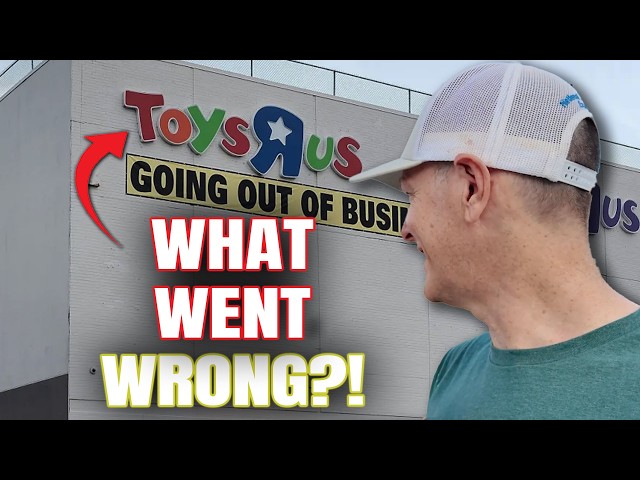
The rise and fall of Toys "R" Us: From $13B to bankrupcty

A toy empire with 98% brand recognition and 1,600 stores — killed by a $5 billion debt load it couldn't escape.

By The Numbers

1,600
stores at peak
$5B
debt at buyout
33,000
jobs lost at liquidation

What They Nailed Early

Built the first category killer for toys — supermarket-style selection where every toy existed in one place. Rode the big-box wave to 1,600 stores in 20 years. Owned 25% of the US toy market and 98% brand recognition.

What Changed

Discounters like Walmart and Target doubled store sizes and stocked the top 70% sellers dirt cheap, making separate trips inconvenient. E-commerce emerged, and Toys R Us handed Amazon its toy business for $50M/year. Then private equity loaded $5B debt requiring $400M annual interest — handcuffing reinvestment just as tablets disrupted toy demand.

Where it Landed

Chapter 11 in September 2017. Suppliers stopped shipping before Christmas. Liquidated March 2018. Founder Charles Lazarus died one week after closure. 33,000 jobs gone.

The Principles

1. 
Debt amplifies downside in declining markets. $400M annual interest meant Toys R Us couldn't reinvest while competitors innovated freely.
2. 
Never outsource your future to a competitor. The Amazon deal for $50M/year helped build the giant that crushed them.
3. 
Structural headwinds compound fast. Fewer kids, discounters, e-commerce, and tablets — each alone manageable, together fatal without flexibility.

Builder's Takeaway

3 warning signs your business can't survive disruption:
• 
Debt load requires growth when market is shrinking (death spiral)
• 
Can't reinvest in experience while competitors improve (falling behind)
• 
Multiple headwinds hit at once with no financial cushion (game over)
Want the whole story? → Watch this on YouTube