← Back to all One Page Business Stories

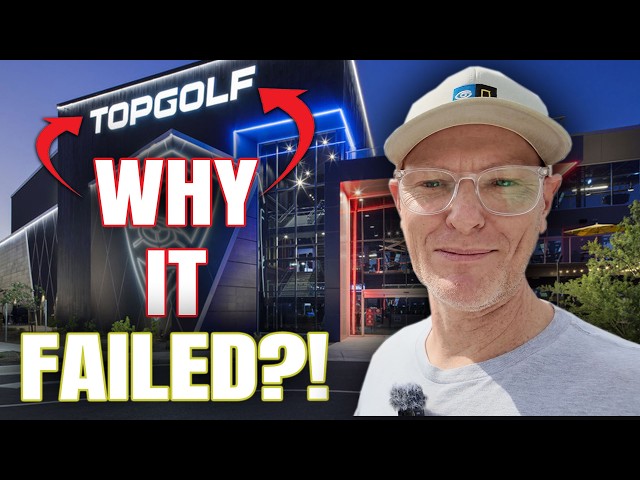
The rise & fall of Topgolf: what went wrong?

A golf experience that grew 30% annually to $1.1B in revenue — then consumers decided the fad was over.

By The Numbers

$1.1B
peak revenue in 2019
-10%
same-store sales decline
-40%
stock crash from peak

What They Nailed Early

Created a tech-enhanced driving range that appealed to non-golfers looking for group activities. Hit massive scale with locations doing $10-20M annually. Perfect timing as millennials gained spending power and craved experiential outings.

What Changed

Post-COVID normalization hit hard. Consumer behavior reverted — people tried it once and didn't return. Inflation squeezed wallets while Topgolf charged $36/person average spend. Rising interest rates crushed margins on the borrowed capital used to build $15-40M facilities. Competition emerged with cheaper indoor alternatives requiring fraction of the capital.

Where it Landed

Stock down 40%. Same-store sales declining 10% year-over-year. Splitting from Callaway merger to salvage both brands. Still operating but growth engine stalled.

The Principles

1. 
Fads normalize faster than you think. Post-COVID behavior changes weren't permanent — people reverted and the 'tried it once' problem emerged.
2. 
Capital intensity becomes a liability when rates rise. Borrowing $15-40M per location works great at low rates, brutal when interest spikes.
3. 
Competitive moats erode quickly in tech-driven experiences. Indoor competitors now offer similar digital golf for 1/20th the capital investment.

Builder's Takeaway

If you're building an experience business, watch for:
• 
One-and-done risk — novelty fades if there's no reason to return repeatedly
• 
High capital + high prices = no margin for error when economy shifts
• 
Tech advantages are temporary — someone will copy it cheaper and faster
Want the whole story? → Watch this on YouTube