← Back to all One Page Business Stories

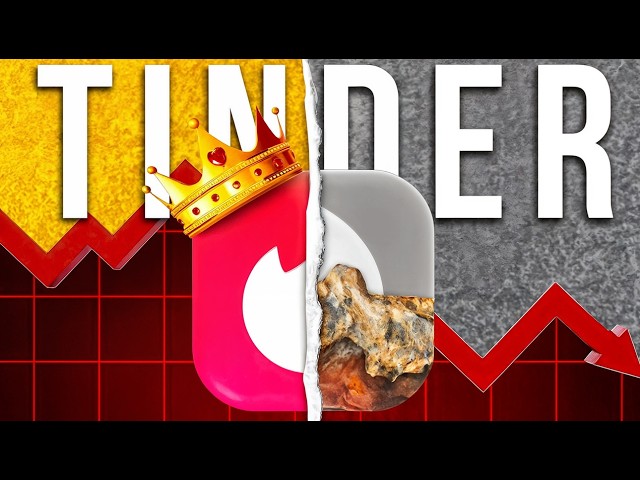
The rise and fall of Tinder: what really killed the app?

The dating app that hit $1B in revenue by gamifying romance — then lost 600,000 users when the world stopped swiping.

By The Numbers

$1B+
peak annual revenue
90 min
daily usage per user
-70%
stock crash in 2022

What They Nailed Early

Eliminated the fear of rejection by making dating a swipe game where you only see mutual interest. Rode the mobile wave perfectly, turning mate-finding into an addictive app. Hit 1 billion swipes daily and 16 million matches within just a few years.

What Changed

The fundamental misalignment caught up: Tinder made money keeping people swiping, but users wanted to find a mate and leave. Gen Z rejected hookup culture and didn't trust online strangers. Competition from Bumble and Hinge carved up market share. The millennial tailwind disappeared, and 79% of users reported total frustration.

Where it Landed

Revenue flatlined. Lost 600,000 users in one major market. Match stock crashed 70% in 2022. The parent company CEO had to personally take over the turnaround. Five CEOs in four years.

The Principles

1. 
Watch for misaligned incentives. When your revenue model depends on NOT solving the customer's problem, trust erodes fast.
2. 
Generational tailwinds reverse. Tinder was built for millennials avoiding rejection; Gen Z wants authenticity and safety, not gamified hookups.
3. 
Thrashing reveals panic. Crypto promotions and metaverse stunts signal management doesn't understand why growth stopped — the world changed underneath them.

Builder's Takeaway

If you're riding a generational or tech wave, watch for:
• 
Incentive misalignment — does solving their problem kill your revenue?
• 
Demographic shift — the cohort that made you may not be who's coming next
• 
Gimmick pivots signal core denial — fix the model, not the marketing
Want the whole story? → Watch this on YouTube