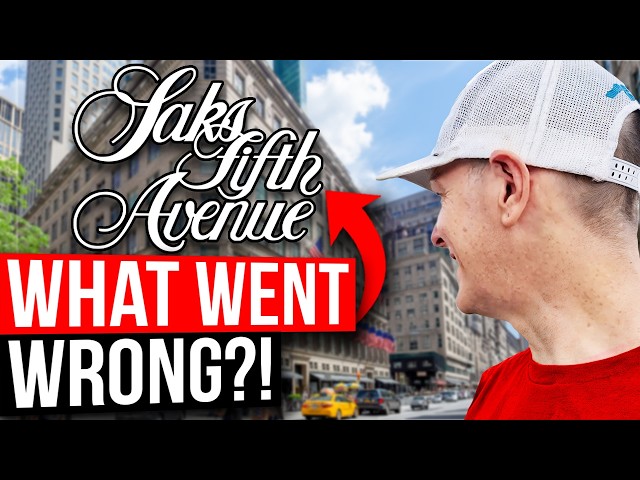
Built America's ultimate luxury destination. Fixed prices and no-questions-asked refunds were radical in 1867. By 1969, 28 stores across 16 states. Became so synonymous with luxury the Fifth Avenue flagship got its own zip code.
What Changed
Real estate investor Richard Baker bought Saks in 2013 and treated it like a property portfolio, not a retail business. He sold off flagship buildings for cash, split the digital and physical businesses into separate entities, then merged struggling Saks with bankrupt Neiman Marcus in 2024. Vendors stopped shipping when they saw the distressed debt signals.
Where it Landed
Chapter 11 bankruptcy, January 2026. Over $3 billion in debt. Amazon wrote off its $475M investment as worthless. Hudson Bay Company sold for $30M to Canadian Tire. Department stores dropped from 14% of US retail in 1990 to under 2% by 2024.
The Principles
1.
Real estate thinking kills retail. When the owner cares more about extracting property value than serving customers, the brand dies from neglect.
2.
Splitting digital from physical breaks the customer experience. Two separate entities under one brand creates misaligned incentives and operational chaos.
3.
Know where the puck is going. Boomers wanted luxury labels; millennials want experiences; Gen Z wants Supreme. Saks built for a customer that's aging out.
Builder's Takeaway
3 warning signs your retail business is built for yesterday:
•
Your owner treats stores as real estate assets, not customer destinations
•
You're splitting channels that should be unified (digital vs. physical)
•
Your core customer is aging out and younger cohorts don't care about your category