← Back to all One Page Business Stories

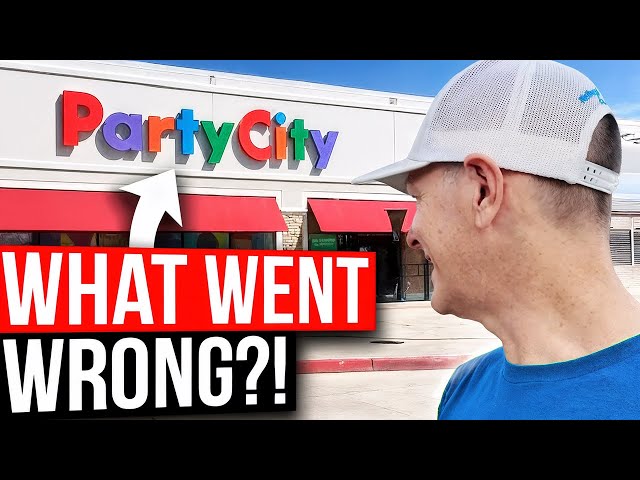
The rise and fall of Party City: From $2.4B to bankruptcy

A $2.4B party supply giant with 900 stores and 20% market share — killed by fewer kids, Amazon, and $115M in annual debt payments.

By The Numbers

$2.4B
peak revenue annually
$115M
annual debt interest payments
12,000
jobs lost at closure

What They Nailed Early

Built the first party supply category killer at the perfect time. Rode the wave of baby boomer parents throwing extravagant parties for their kids. Hit 900 stores and $2.4B in sales by 2009, dominating with 20% market share.

What Changed

Birth rates declined 20% since 2005, and millennial parents stopped throwing lavish parties. Amazon gutted their e-commerce advantage. Then a 2012 leveraged buyout loaded the chain with billions in debt—$115M/year just in interest—leaving no cash to reinvest. Helium shortage, COVID, and inventory bullwhip effect finished them off.

Where it Landed

✕ Bankruptcy twice—2023 and 2024. 12,000 jobs lost. Corporate stores closed forever. Only franchises remain operating. The party supply category killer era is done.

The Principles

1. 
Debt can be a death sentence. Party City needed $115M/year for stores and e-commerce but had to pay lenders instead—they couldn't compete.
2. 
Demographic tailwinds reverse. Fewer kids plus different parenting values meant the 'peak party' era ended—and the business model died with it.
3. 
Fragility kills during shocks. Helium shortage, COVID, bullwhip effect—any one might've been survivable, but stacked headwinds crushed a leveraged business.

Builder's Takeaway

3 warning signs your business is mortally wounded:
• 
Debt payments exceed reinvestment budget—you're paying banks instead of customers
• 
Core demographic tailwind is reversing (fewer buyers, different values)
• 
Can't compete on convenience—Amazon or big box has your category covered
Want the whole story? → Watch this on YouTube