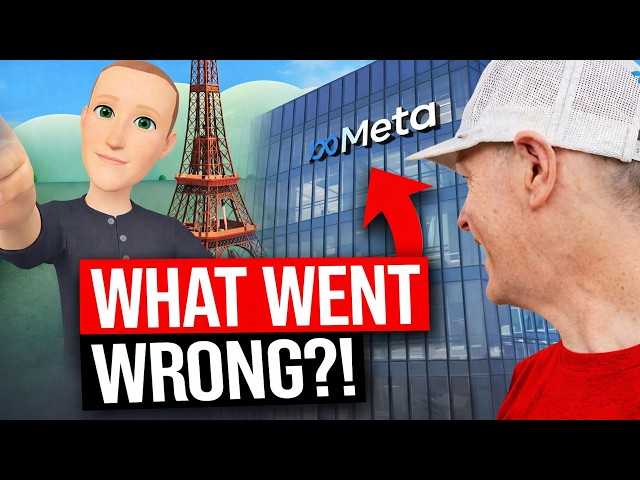
Zuckerberg saw VR's potential early, acquiring Oculus for $2B in 2014. Poured $30B into development over seven years. Built Reality Labs as Meta's moonshot division, betting the company's future on virtual reality.
What Changed
The metaverse launched to silence. Horizon Worlds peaked at 300,000 users while Roblox had 60 million. Internal documents showed most virtual spaces had under 50 visitors. Even Meta employees wouldn't use it. Then ChatGPT hit 100 million users faster than any product in history, proving people wanted AI to enhance reality, not replace it.
Where it Landed
Metaverse officially dead. Reality Labs shut down March 2026. 1,500 employees laid off. Lost $18B in 2024 alone to generate $1B revenue. Stock jumped 7% when Wall Street learned they were cutting the cord.
The Principles
1.
Build for human nature, not against it. People want technology that makes reality better, not products that ask them to abandon it.
2.
Product-market fit shows up in the numbers immediately. 300K users vs 100M users in the same timeframe tells you everything about demand.
3.
Even infinite cash can't save a product nobody wants. $90 billion only delayed the inevitable reckoning with market reality.
Builder's Takeaway
If you're building the 'next big thing,' watch for:
•
Early adoption velocity — if your own employees won't use it, customers won't either
•
Human nature alignment — does your product enhance life or ask people to escape it?
•
Market signals over vision — when usage numbers scream 'no,' listen faster than Meta did