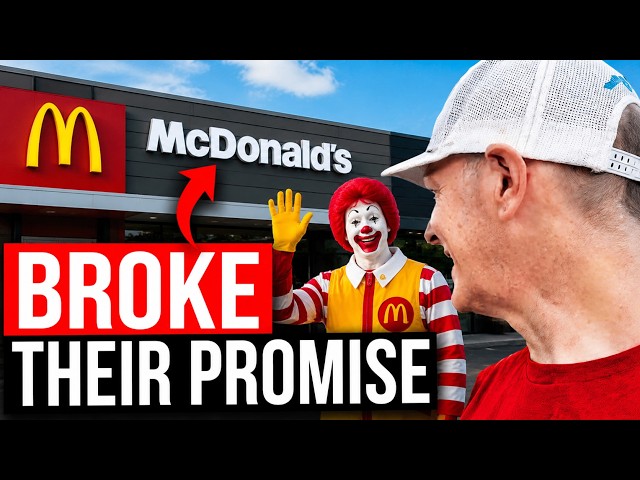
Built the first mainstream affordable fast food model for middle America. The real estate strategy created a compounding moat where McDonald's owned the land, franchisees took operating risk, and rents rose with sales.
What Changed
CEO Easterbrook refranchised 95% of corporate stores and returned $50B to shareholders, pushing all risk onto franchisees. When COVID hit, franchisees raised prices to survive cost pressures. McDonald's broke its founding promise of affordability.
Where it Landed
Same-store sales down nearly 6% in US. Core low-income customers ($45K household) pulling back hard. Now caught in dead zone: too expensive for everyday, not good enough for splurge.
The Principles
1.
Your moat isn't your excuse to neglect customers. McDonald's real estate advantage let them survive breaking their brand promise three times, but each cycle erodes trust.
2.
Financialization eats brands. Pushing $50B to shareholders while refranchising stores mortgaged the future for immediate Wall Street gains that leadership cashed out on.
3.
Brand promises have expiration dates. GLP-1s, work-from-home, and fast-casual competition all hit simultaneously because McDonald's drifted from its affordability anchor for a decade.
Builder's Takeaway
If you're running a franchise model, watch for:
•
Misaligned incentives between corporate and franchisees destroy brands slowly then suddenly
•
Extracting short-term shareholder value by pushing risk downstream creates ticking time bombs
•
Real estate ownership buys forgiveness for mistakes but doesn't make mistakes free