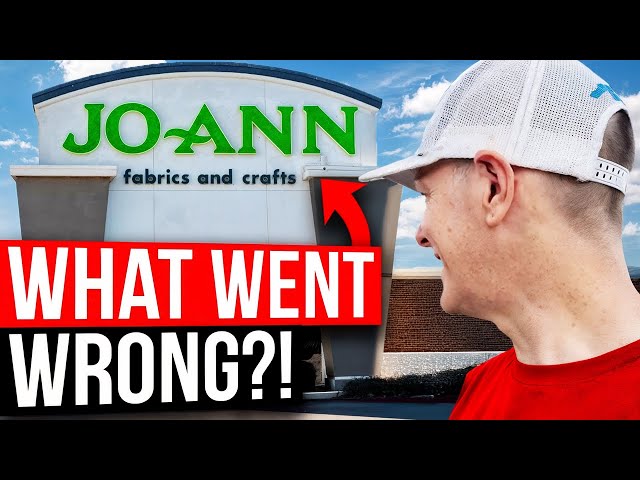
Rode the superstore wave and owned the category. By 1980 they had 500 stores nationwide, serving Silent Generation and Greatest Generation women for whom sewing was essential. Acquired failing competitors and became the undisputed fabric king.
What Changed
Private equity firm Leonard Green bought them in 2011 for $1.6B, loading the business with 5x earnings in debt. Management couldn't reinvest in stores or inventory — just service debt. Meanwhile, their core customer aged out, cheap overseas clothing flooded in, and younger generations never learned to sew. COVID gave a brief spike, but it evaporated.
Where it Landed
Chapter 11 bankruptcy in March 2024. Emerged briefly, then filed again in January 2025. Liquidated by May 2025. All 19,000 employees lost jobs. Michaels bought the website assets.
The Principles
1.
Debt kills optionality. When headwinds hit, you need capital to adapt — Joann had to service $2.4B instead of reinvesting in the business.
2.
Generational turnover is existential. When your core customer dies off and the next generation has zero attachment, you're toast without a bridge strategy.
3.
Private equity leverage assumes no headwinds. Loading 5x debt on a business facing demographic collapse and globalization is a time bomb waiting to explode.
Builder's Takeaway
3 warning signs your category is dying beneath you:
•
Your customer base is aging out faster than you're acquiring new ones
•
Debt prevents you from adapting when the market shifts hard
•
Management doesn't use the product — disconnect kills institutional knowledge