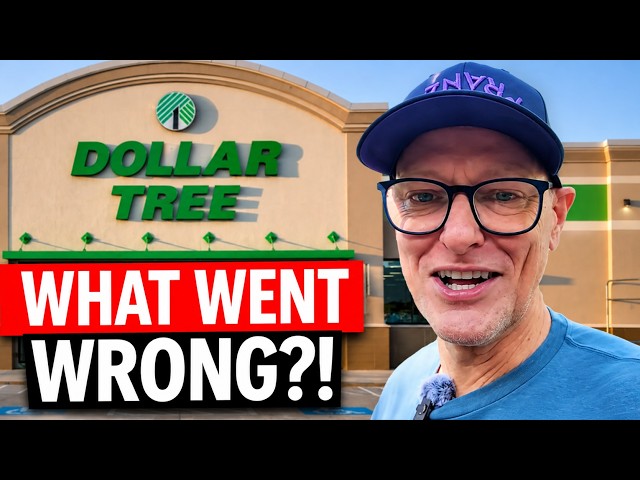
Built a radically simple model: everything costs exactly $1. No price tags needed, operations were dead simple, and customers knew the deal instantly. Grew from 1986 to 5,100 stores by 2014.
What Changed
Dollar Tree got deal fever and bought struggling Family Dollar for $9B in 2015. Family Dollar served poorer customers in tired stores, had overbuilt locations cannibalizing each other, and faced a K-shaped economy crushing its base. Dollar Tree kept it as independent subsidiary but couldn't fix the structural rot.
Where it Landed
Sold Family Dollar for $1B after burning $7B. 1,270 dead rats found in warehouse, $41.7M FDA fine. Dollar Tree survives with 6,600 stores now selling items up to $7, not $1.
The Principles
1.
Don't buy bad businesses at any price. Mixing raisins and turds still leaves you with turds — a great retailer bolting on a struggling one doesn't fix structural problems.
2.
Serve different customers = different business. Family Dollar targeted the poorest shoppers in a K-shaped economy while Dollar Tree served middle America trading down — fundamentally incompatible.
3.
Deal fever destroys capital. Despite armies of MBAs and bankers, management never asked if Family Dollar was actually fixable or worth owning at all.
Builder's Takeaway
3 questions before any acquisition:
•
Is this actually a good business, or just big?
•
Do we serve the same customer with same economics?
•
Can we articulate what specifically we'll fix and how?