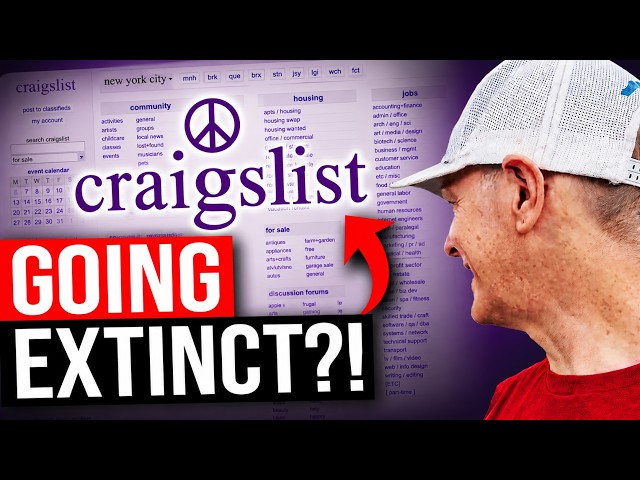
Built the first free classified ads platform that replaced $20B of newspaper revenue. Created unstoppable network effects—more listings attracted more users, more users attracted more listings. Did $35M per employee at peak, 20x more than Google.
What Changed
Facebook Marketplace launched in 2016 with real names and mobile optimization. Craigslist's anonymity became a liability after the "Craigslist Killer" made headlines. The site refused to modernize, staying desktop-focused while the world went mobile. Specialists like Indeed and Zillow carved up each category.
Where it Landed
Revenue crashed from $1B to $300M in 5 years. Facebook Marketplace hit 1 billion users. Craig still lives in an apartment, doesn't own a car, gave away $500M to journalism—the industry he helped destroy.
The Principles
1.
"Free forever" isn't a moat. When you refuse revenue, you can't invest in evolution. Craigslist's minimalism was a feature in 2005, a fatal bug by 2018.
2.
Anonymity flips from feature to bug. What felt authentic in 1995 felt dangerous by 2010. Safety and trust became the new competitive advantage.
3.
Specialists beat generalists when markets mature. Being okay at everything loses to companies doing one thing exceptionally well—Indeed for jobs, Zillow for housing, Facebook for peer-to-peer.
Builder's Takeaway
If you're building a dominant platform, watch for:
•
Platform shifts you ignore (mobile killed desktop-only Craigslist)
•
When your core feature becomes your fatal flaw (anonymity)
•
Specialists carving up your generalist empire, one vertical at a time