← Back to all One Page Business Stories

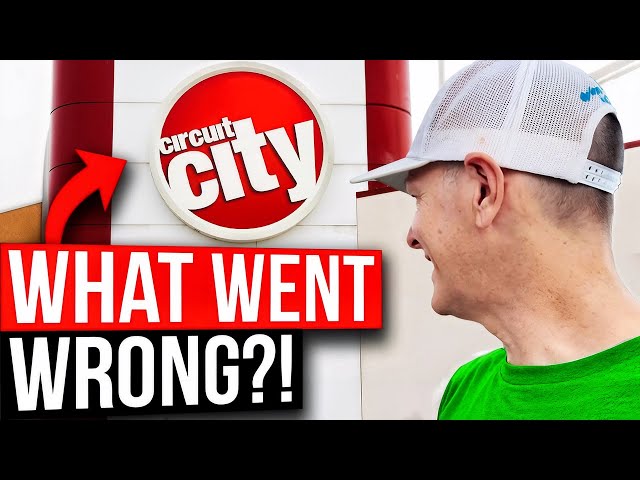
The rise and fall of Circuit City: How a $12 billion empire vanished

The electronics giant that went from the best-performing stock of the 1980s to bankruptcy — killed by copying the competitor it once had the chance to buy for $30M.

By The Numbers

$12B
peak revenue annually
80x
stock gain in 1980s
$0
market value at bankruptcy

What They Nailed Early

Pioneered the electronics superstore model at exactly the right moment. Stack them deep, sell them cheap, with knowledgeable commissioned salespeople who could guide customers through complex purchases. The high-touch model worked perfectly when VCRs cost $600 and people needed help.

What Changed

New CEO Alan McCollar, an MBA operations guy without retail intuition, decided to compete with Best Buy by copying Best Buy. He eliminated commissioned salespeople, exited appliances right before the housing boom, and sold off CarMax. Then successor Philip Schoonover doubled down, doing another round of layoffs that sent experienced staff straight to Best Buy — taking their customers with them.

Where it Landed

Chapter 11 bankruptcy in November 2008. All 567 stores liquidated by January 2009. 34,000 jobs lost. Stock went from $10B valuation in 2000 to zero. Blockbuster tried to buy them at the last minute but couldn't close the deal.

The Principles

1. 
Copying surface tactics without understanding culture kills. Circuit City mimicked Best Buy's no-commission model but lacked Best Buy's supplier relationships, scale advantages, and employee culture that made it work.
2. 
Hire for the specific job, not the impressive resume. McCollar and Schoonover were competent in their previous roles but had never run turnarounds or companies this size — and it showed in every decision.
3. 
Cash reserves aren't for shareholders when the storm is coming. Circuit City burned $1B+ on buybacks at $20/share instead of modernizing stores or building buffer — then had no rainy day fund when suppliers demanded upfront payment in 2008.

Builder's Takeaway

3 fatal mistakes that sink retail chains:
• 
Don't gut your differentiation to copy a competitor — you'll lose what made you special without gaining their advantages
• 
Keep cash reserves when the business is fragile — buybacks feel good until suppliers won't ship merchandise
• 
Hire people who've done the specific job before, not just impressive-sounding roles elsewhere
Want the whole story? → Watch this on YouTube