← Back to all One Page Business Stories

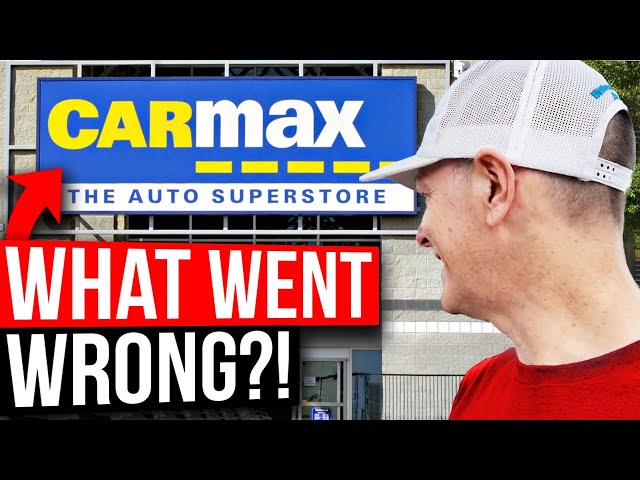
The rise and fall of CarMax: 32B giant to business failure?!

The used car dealer that solved haggling and hit $32 billion in revenue — now getting crushed by a competitor that was left for dead at $3.72 a share.

By The Numbers

$32B
peak revenue in 2021
$14B
in car loans held
-75%
stock crash from peak

What They Nailed Early

Built the first transparent used car superstore in a market built on deception. No haggling, 125-point inspections, money-back guarantee. Took seven years to dial in the model before scaling — hitting $2 billion in sales by 2000.

What Changed

Millennials and Gen Z wanted to buy cars entirely online, not just research online then visit stores. CarMax invested in 'omni-channel' but still pushed customers into 200 expensive stores with 25,000 employees. Meanwhile, Carvana restructured, cut $1.1B in costs, and went pure online — then surged 10,000% while CarMax stagnated.

Where it Landed

Stock down 75% to 2012 levels. CEO fired. Layoffs in waves. Sales down 7% while Carvana is up 60%. Market now values Carvana higher despite CarMax doing 4x the revenue.

The Principles

1. 
Omni-channel can be a trap. If customers want pure online and you build hybrid, you carry store costs without the customer preference advantage.
2. 
Asset-heavy models lose flexibility. When the market shifts, 200 stores and 25,000 employees become anchors, not assets — competitors without them can pivot faster.
3. 
Solving yesterday's problem isn't a moat. CarMax fixed haggling and transparency, but when the next shift came (online-first buying), that advantage evaporated.

Builder's Takeaway

If you're building retail in a shifting market:
• 
Watch for the 'omni-channel' trap — sometimes customers want one channel, not all of them
• 
Asset-light competitors can restructure faster when markets turn against you
• 
Demographics shift slowly, then all at once — Gen Z crossed 43% online-only preference
Want the whole story? → Watch this on YouTube